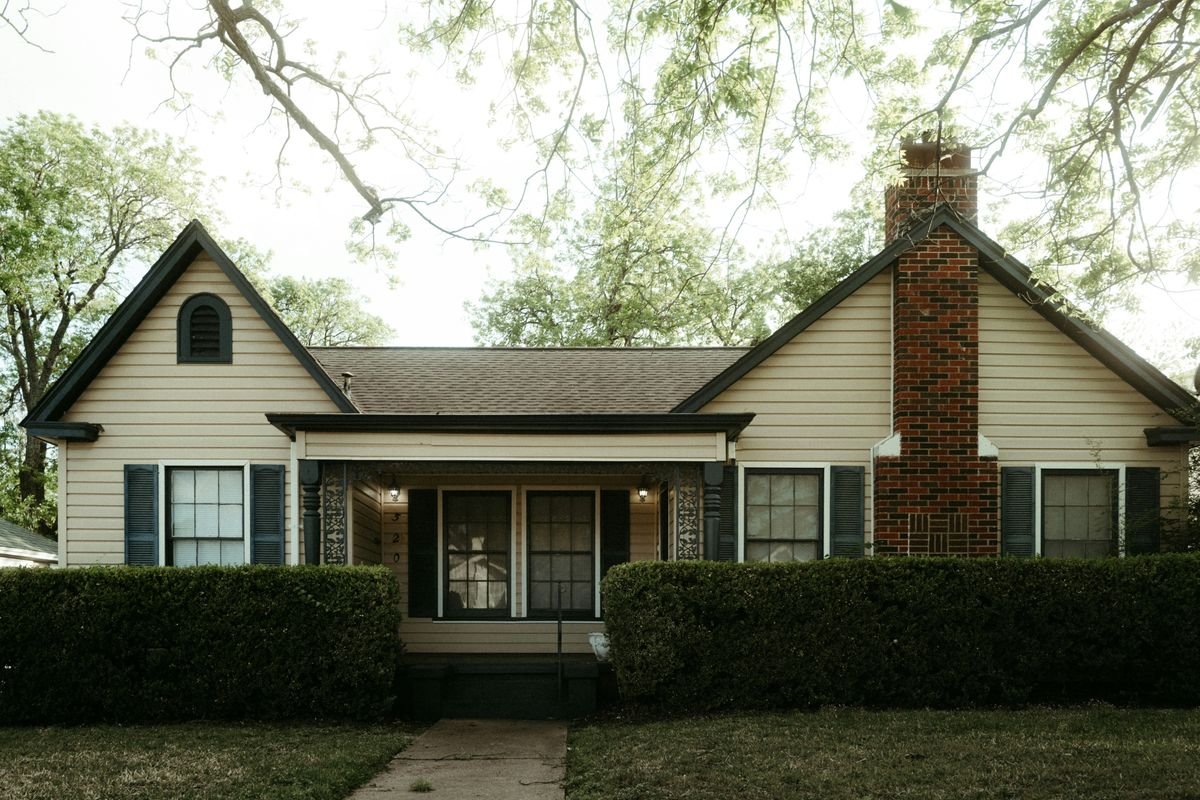
Short answer first: on an $80,000 salary, the standard lending guideline points to a total housing payment of about $1,867 a month — which, at a 30-year rate around 7.25%, reaches a home of roughly $218,000 to $267,000 in an average-tax area, and closer to $189,000 to $227,000 where property taxes run high.
That range is wider than most "how much house" answers admit, and for good reason. The same $80,000 buys noticeably different houses depending on four inputs: the down payment, the interest rate, the local property tax rate, and how much other debt is already on the books. Rates matter more than usual right now — Freddie Mac's weekly survey put the average 30-year fixed rate at 7.24% on October 29, 2026, up from 6.17% a year earlier — and a single point of rate moves the reachable price by roughly $20,000 at this income.
This guide walks through the guideline lenders use, the payment it produces at $80,000, the price each down payment reaches, how rates and existing debt shift the answer, and the cash needed at closing. To run your own numbers alongside it, open the mortgage calculator in another tab.
The 28/36 rule at $80,000
Most lenders start with the 28/36 rule: total housing costs at or below 28% of gross monthly income, and all monthly debt payments combined at or below 36%. An $80,000 salary is about $6,667 a month before taxes.
| Guideline | Share of $6,667/mo | Monthly limit |
|---|---|---|
| 28% — housing (PITI) | 0.28 × $6,667 | ~$1,867 |
| 36% — all debt combined | 0.36 × $6,667 | ~$2,400 |
"Housing" in that first line means PITI — principal, interest, property taxes, and homeowners insurance — plus mortgage insurance if the down payment is under 20%. It is not the loan payment alone, and that distinction is where most affordability math goes wrong. A quote of "$1,400 a month" from a lender's rate sheet is usually principal and interest only; the bill that arrives each month includes the escrow for taxes and insurance on top.
Treat these as guidelines, not hard limits. Many loan programs approve back-end ratios well above 36%, and an approval letter often lands higher than the 28% figure. The guideline's usefulness is as a comfort benchmark: it describes a payment that leaves room in the budget for everything else.
The payment that fits — where the $1,867 goes
Working backward from $1,867 shows how much of the payment actually reaches the loan. Using a mid-range set of assumptions — property tax of about 1.1% of the home's value a year, homeowners insurance around $2,000 a year, and a 30-year fixed rate of 7.25% — here is how the payment splits on a home of about $229,000 with 10% down:
| Piece of the payment | Monthly |
|---|---|
| Principal & interest (~$206,000 loan at 7.25%) | ~$1,405 |
| Property tax + homeowners insurance | ~$376 |
| Mortgage insurance (PMI, under 20% down) | ~$86 |
| Total PITI | ~$1,867 |
A useful shortcut for rough math: at 7.25% on a 30-year loan, every $100,000 borrowed costs about $682 a month in principal and interest. At 6.25% it is about $616, and at 7.75% about $716. That spread is why a rate quote from last spring is not a reliable input today.
Down payment scenarios — the price each one reaches
Holding the total payment at about $1,867 and the rate at 7.25%, the down payment changes the reachable price in two ways: it shrinks the loan, and at 20% it removes PMI entirely.
| Down payment | Average-tax area (1.1%, $2,000 ins.) | High-tax area (2.0%, $3,000 ins.) |
|---|---|---|
| 5% down | ~$218,000 | ~$189,000 |
| 10% down | ~$229,000 | ~$198,000 |
| 20% down | ~$267,000 | ~$227,000 |
Two things stand out. First, the jump from 10% to 20% down is much larger than the jump from 5% to 10%, because removing roughly $86 a month of mortgage insurance frees that money for principal and interest. Second, the high-tax column is not an edge case. In states that lean on property tax instead of an income tax — Texas is the familiar example — effective rates near 2% are common, and that alone takes $30,000 to $40,000 off the reachable price at the same income. Checking the actual tax rate for the specific county and school district before shopping makes the estimate far more reliable.
The PMI figure used here (about 0.5% of the loan a year) is a mid-range assumption; actual mortgage insurance pricing depends on credit score and down payment and can be noticeably higher or lower.
What existing debt does to the number
The 36% line is a ceiling on all monthly debt — the mortgage plus car payments, student loans, credit card minimums and any personal loans. At $80,000 that ceiling is about $2,400. Subtract the other debt, and whatever is left is the most the housing payment can be under the guideline.
| Other monthly debt | Room left for housing | Price reached (10% down, 7.25%) |
|---|---|---|
| $0 – $533 | ~$1,867 (28% cap binds) | ~$229,000 |
| $700 | ~$1,700 | ~$206,000 |
| $900 | ~$1,500 | ~$179,000 |
Up to about $533 a month in other payments, the 28% housing cap is the tighter limit and existing debt doesn't change the answer. Past that point, every extra $100 of monthly debt removes roughly $13,000 to $14,000 of purchasing power. A $650 car payment plus a $250 student loan — not an unusual combination — takes the reachable price from about $229,000 down to about $179,000. The debt payoff calculator shows how long it would take to clear a balance and free up that monthly room.
How much the interest rate moves it
With the payment held at about $1,867 and 10% down in an average-tax area, here is the reachable price across a realistic range of rates:
| 30-year fixed rate | P&I per $100,000 borrowed | Price reached |
|---|---|---|
| 6.25% | ~$616 | ~$249,000 |
| 6.75% | ~$649 | ~$238,000 |
| 7.25% | ~$682 | ~$229,000 |
| 7.75% | ~$716 | ~$220,000 |
Roughly $10,000 of purchasing power per half-point. Rate quotes also vary between lenders on the same day, often by more than a quarter-point, which is why comparing several written Loan Estimates is one of the few levers fully in the buyer's control. The APR on each estimate folds lender fees into the comparison.
The cash needed at closing
The monthly payment decides what's affordable to own; the cash decides what's affordable to buy. Two separate pots of money are needed on closing day:
- Down payment. On a home around $230,000: about $11,500 at 5%, $23,000 at 10%, or $46,000 at 20%. Conventional loans start at 3% down and FHA loans at 3.5%, each with mortgage insurance.
- Closing costs. Typically 2% to 5% of the price — lender fees, title, appraisal, and prepaid taxes and insurance to fund escrow. On $230,000 that is roughly $4,600 to $11,500, on top of the down payment. Seller concessions can cover part of it in some markets.
Many lenders also want to see a cushion left over after closing, often a couple of months of payments. Draining every dollar of savings into the down payment can leave a new owner with no buffer for the first repair — which is part of why an emergency fund belongs in the plan alongside the down payment.
A take-home-pay reality check
The 28% guideline is built on gross income, but bills are paid from take-home pay. After federal income tax, FICA, health insurance and a typical retirement contribution, an $80,000 salary often lands somewhere around $5,000 a month in the bank, though state taxes and benefits move that a lot. A $1,867 housing payment is about 37% of that figure.
Some households are comfortable there. Others use a stricter benchmark, such as keeping housing near 25% of take-home pay. On roughly $5,000 take-home, that's about $1,250 a month — which reaches a home of about $146,000 with 10% down at 7.25%. The gap between those two answers ($146,000 versus $229,000 at the same salary) is the real decision, and it depends on what else the budget has to carry: childcare, commuting, saving, and the maintenance that comes with owning. The budget calculator is the place to see how much monthly slack actually exists before choosing a payment.
The bottom line
On an $80,000 salary, the 28/36 guideline points to a housing payment near $1,867 a month. With rates around 7.25%, that reaches roughly $218,000 to $267,000 in an average-tax area and $189,000 to $227,000 where property taxes are high — less if existing debt pushes past about $533 a month, and less again if the comfort benchmark is take-home pay rather than gross. Down payment, rate, and local taxes do most of the moving; closing costs of 2% to 5% come on top of the down payment.
For comparison at a lower income, see how much house a $60,000 salary can afford. And for the specific price, rate, and tax figures in front of you, the mortgage calculator returns the full monthly payment in a few seconds.
Frequently Asked Questions
How much house can I afford on an $80,000 salary?
On an $80,000 salary (about $6,667 a month gross), the 28% guideline caps the total housing payment near $1,867 a month. At a 30-year fixed rate around 7.25%, with property taxes near 1.1% of the price and about $2,000 a year in homeowners insurance, that payment supports a home of roughly $218,000 to $267,000 depending on the down payment. In a high-property-tax area the same payment reaches closer to $189,000 to $227,000. Existing debt, the interest rate, and local taxes all move the figure.
What is the 28/36 rule on an $80,000 salary?
The 28/36 rule is a lending guideline: total housing costs (principal, interest, property taxes, and insurance) at or below 28% of gross monthly income, and all monthly debt payments combined, including the mortgage, at or below 36%. On $80,000 a year, that works out to about $1,867 a month for housing and $2,400 a month for all debt.
How do car loans and student loans change what an $80,000 salary can afford?
They count against the 36% total-debt ceiling of $2,400 a month. Up to about $533 a month in other debt, the 28% housing cap is the tighter limit. At $700 a month in other debt, the room left for housing drops to about $1,700 and the reachable price at 10% down falls from about $229,000 to about $206,000. At $900 a month it drops to about $1,500 and roughly $179,000.
How much do mortgage rates change the price an $80,000 salary can buy?
Each percentage point matters a lot. Holding the housing payment at about $1,867 a month with 10% down, the reachable price is roughly $249,000 at 6.25%, $238,000 at 6.75%, $229,000 at 7.25%, and $220,000 at 7.75%. Freddie Mac's weekly survey put the average 30-year fixed rate at 7.24% on October 29, 2026, so current quotes are worth checking against these figures.
How much cash is needed to buy a house on an $80,000 salary?
The down payment plus closing costs. On a home around $230,000, 10% down is about $23,000, and closing costs of 2% to 5% of the price add roughly $4,600 to $11,500. Lenders may also look for a few months of payments in reserve after closing. Lower-down-payment loans reduce the upfront cash but add mortgage insurance to the monthly payment.
This article is provided for educational purposes only and does not constitute financial, legal, or tax advice. The figures above are worked examples using stated assumptions (30-year fixed rate, property tax as a share of value, insurance, and PMI estimates), not quotes. Rates, tax rates, insurance costs, and lending guidelines vary by lender, location, and borrower — confirm specifics with a licensed mortgage professional before making a purchase decision. Average rate data: Freddie Mac Primary Mortgage Market Survey, October 29, 2026.